Wong Shee Ping
Date Published
: Wong Shee
: Male
:
:
:
: China
: Melbourne
: Melbourne
: Writer / author
Wong Shee Ping
Wong Yue-kung 黃右公
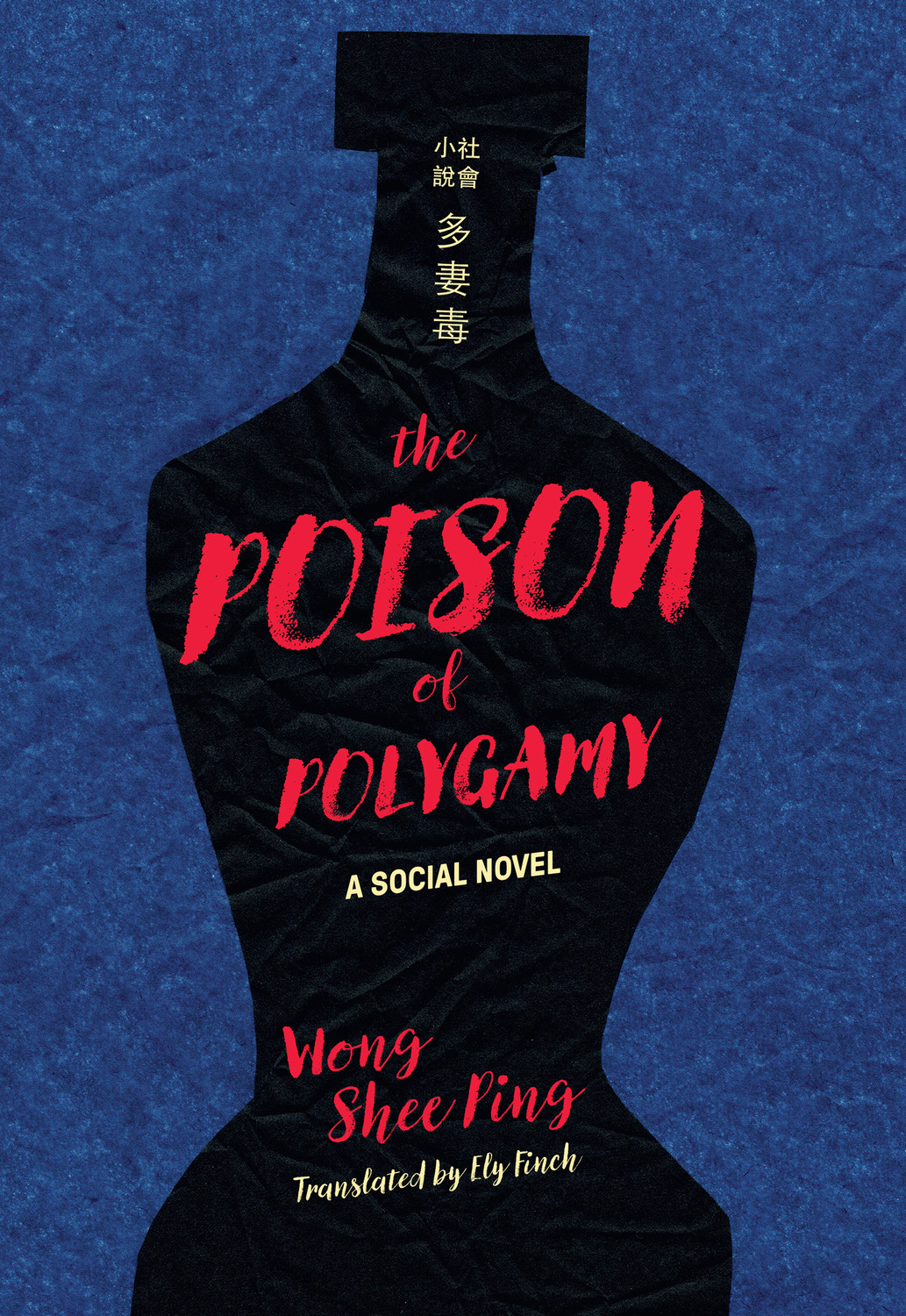
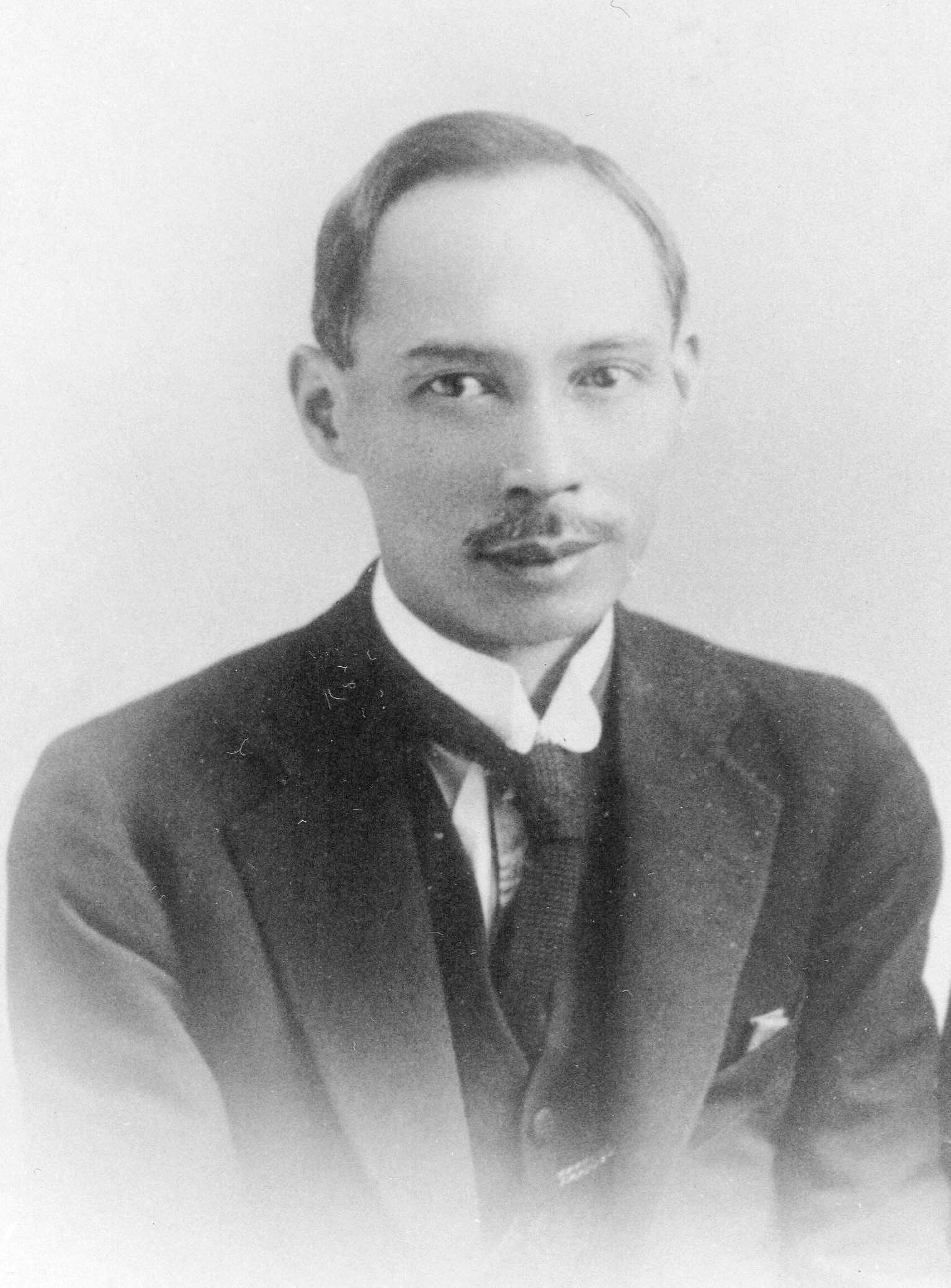
When The Poison of Polygamy was serialised in the Chinese Times it was without an author being named, a not unusual circumstance. However, references found in other stories published in the same newspaper make clear that the author is Wong Yue-kung 黃右公, also known as Wong Shee Ping黃樹平.[1] Beginning with that name a picture of the author has grown that includes not only elements of his life before and after the novel’s publication, his Christian ministry, political affiliations and additional literary efforts, but also the fact that descendants via his Australian-born daughter, Bonnie Ping, live in Australia today.
Wong Yue-kung was in his mid-thirties to late thirties when he wrote The Poison of Polygamy, having been born in Kaiping County (開平) about 1875.[2] Kaiping had long been one of the primary districts in southern China from which people left to travel throughout the Pacific and so it is not surprising that even before he left home Wong Yue-kung had been trained as a Christian preacher as well as in traditional Chinese culture.[3] That Wong Yue-kung would go to Melbourne was no co-incidence either, as his father was a shareholder in Sun Goon Shing & Co. at 198 Little Bourke Street, Melbourne and his brother, Wong Shefan (黃樹藩) later became its manager.[4] Wong Yue-kung was originally appointed a compositor for the Chinese Times before joining the editorial team with Lew Goot-chee in 1910.[5]
Thus Wong Yue-kung arrived in Melbourne as a young educated man well versed in the literary traditions of China and keen to engage with the modern world, to which he was anxious China should belong. For a man of Wong Yue-kung’s background, the modernisation of China meant foremost the removal of the non-Han Manchus of the Qing dynasty and their replacement with a modern republican form of government. He was therefore early involved with those who later became the Kuomingtang or Nationalist Party, which governed or aspired to govern mainland China from 1912 till 1949. But for Wong Yue-kung China’s modernisation also meant reform of its culture, a reform that involved religion and education. To this end Wong Yue-kung was a leading Christian pastor, a writer of novels (and plays), as well as a newspaper editor, and in his later life also a government official.
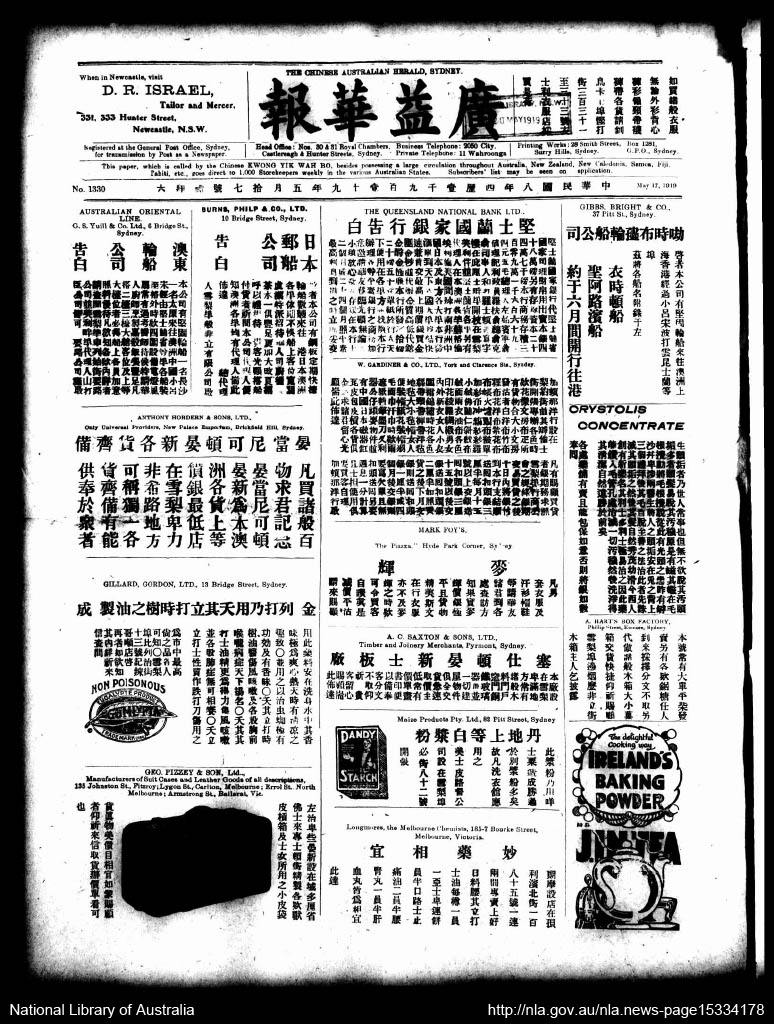
Wong Yue-kung, rose to the position of editor of the Chinese Times after Lew Goot-chee moved to the United States in 1914. Such a position was heavily political and in 1918 Wong Shee Ping was elected Secretary of the new national “Association for Maintaining the Regulations” 維持禁例會, an association founded to resist the White Australia Policy and in particular to re-institute permission for wives to come to Australia.[6] He also often found himself criticised by political opponents using the rival Tung Wah Times newspaper to do so, where he is described as being “silver-tongued”.[7] Wong is also described in this newspaper as formerly an opium addict, and while this may be a piece of scandal from a political rival, it could also hint that the strong condemnation of opium usage found in the novel was inspired by an ex-addicts abhorrence.[8] Wong moved to Sydney and served, from June 1919 to late 1920, as acting editor of the Chinese Republic News.[9] At the same time he was very active in Australia’s Christian communities and in the early 1920s was appointed by the Federal Foreign Mission Committee of the Churches of Christ Conference (外國總傳道會) to travel and preach on behalf of the church in South Australia and Western Australia.[10] On these visits Wong also helped to establish branches of the Chinese Nationalist Party in Melbourne, Adelaide and Perth.[11] He also found time to write a play, which was performed at the First Chinese Nationalist Party Convention in 1922.[12] Wong ’s political efforts were not limited to words alone and in 1921 he and other leading party members in Australia sought and secured the approval of the party’s leader, Dr Sun Yat-sen, to exempt female members from membership fees and to open committee membership to women.
When the Chinese Times, was re-launched yet again, this time in Sydney in 1922, Wong was its editor.[13] Then in the following year Wong Shee Ping married Ellen Louisa (Cissie) Sam, and a daughter, Maude Florence (Bonnie) was born very soon after. Both the wedding and birth occurred in Melbourne and Bonnie married and raised children of her own without knowing more than the vaguest details of her father, as within a year Wong left Australia never to return.[14] In 1924 he was representing Australasian KMT branches as an official delegate to the inaugural National Congress of the Chinese Nationalist Party in Canton. Following the convention, he was appointed by Dr Sun as one of the executive members of the Party’s first Central Propaganda Committee. Soon after he became involved with the Hong Kong Morning Post (香港晨報) and from 1929 to 1931 Wong was appointed as an executive member of the Overseas Community Affairs Council of China’s Nationalist Government.[15] He also held a number of positions as “County Head” in Guangdong Province and continued to be attacked by his enemies in the Tung Wah Times.[16] After the end of the decade however there is no further mention of Wong Yue-kung or Wong Shee Ping in the Australian Chinese language press.
A great deal more detail could be provided concerning Wong Yue-kung, his life in Australia and perhaps with further research, also about his life (or at least his death) in after years in China. Here it is sufficient to emphasise that it is to this member of the Chinese diaspora of the beginning of the 20th century, a man bridging both traditional Chinese and modern culture just as the Empire of China was transforming into a Republic, that we owe the dramatic, political and moral Chinese-Australian tale that is The Poison of Polygamy.
[1] See Translators Introduction, Sec 3. Shee Ping was his original name, and Yue-kung adopted as his pen name, again a not unusual circumstance.
[2] Also known as Hoi Ping or Hoyping. His exact year of birth is uncertain as he gave his age as 44 in 1919 in his membership record in the Chinese Nationalist Party of Australasia. [See: Sydney KMT Archives, Records of membership (Melbourne, Perth, Broome, NZ and Hamilton), 1916-1924, 523-01-0152-108.] In 1923, however, he gave his age as 52 years old. [See National Archives of Australia, ST84/1, 1923/358/31-40.]
[3] Yong, The New Gold Mountain, 129. Wong Yue-kung was trained in China as a preacher, see A. W. Stephenson, A Hundred Years: A Statement Of The Development And Accomplishments Of Churches Of Christ In Australia (Melbourne: Stone-Campbell Books, 1946), 6 also available online at http://digitalcommons.acu.edu/crs_books/398 (accessed 27 May 2018).
[4] Chinese Times, 21 November 1914, 2.
[5] Chinese Australian Herald, 22 October 1910, 2.
[6] Chinese Republic News, 19 November 1918, 7.
[7] Tung Wah Times, 20 December 1919, 8.
[8] Tung Wah Times, 20 March 1924, 7.
[9] Chinese Republic News, 21 June 1919, 6 and 12 December 1919, 6; Chinese Times, 20 November 1920, 5.
[10] Chinese Republic News, 13 November 1920, 6; The Call (Perth), 1st July 1921, 1; The Daily News (Perth), 9 April 1921,5.
[11] See Kuo, Mei-fen and Brett, Judith, Unlocking the History of the Australasian Kuo Min Tang 1911-2013, Australian Scholarly Publishing, Melbourne, 2013.
[12] Chinese Times, 4 February 1922, 5.
[13] The Sun, 27 August 1922, 2.
[14] Chinese Republic News, 5 January 1924, 6.
[15] See a letter from Wong to Central Committee of KMT in 1924, Archive of KMT in Taipei, ‘漢 7959’. List of Officials of the government of Republic of China, 1925-49 (國民政府官職年表guominzhengfu guanzhi nianbiao) (Beijing: Chunghwa publishing, 1995), 283.
[16] Chinese Republic News, 7 February 1925, 6; Tung Wah Times, 21 March 1925, 5.