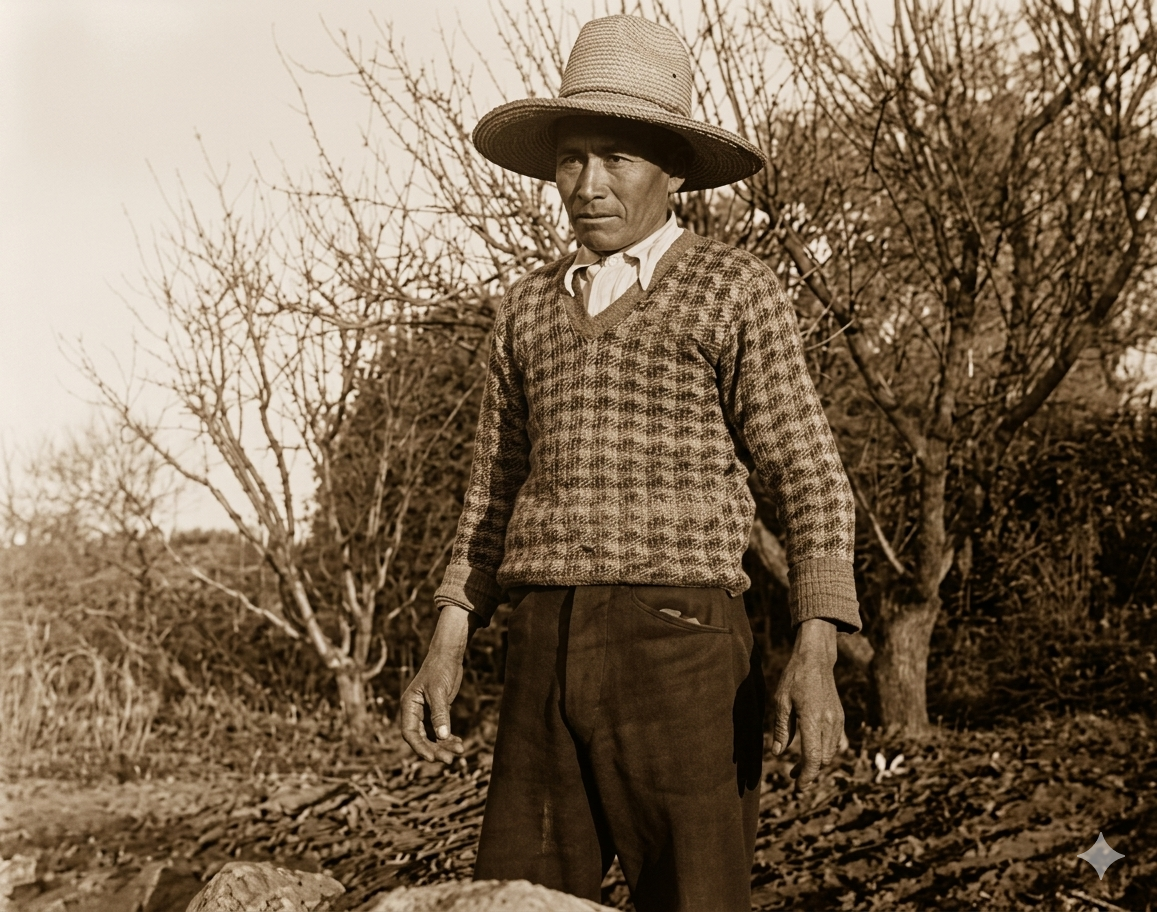
Condobolin Chinatown / Camp
Date Published
: Camps, Chinatown, scrub cutting (bush clearing)
: Central West (NSW)
: Condobolin
: c.1880 to c.1940
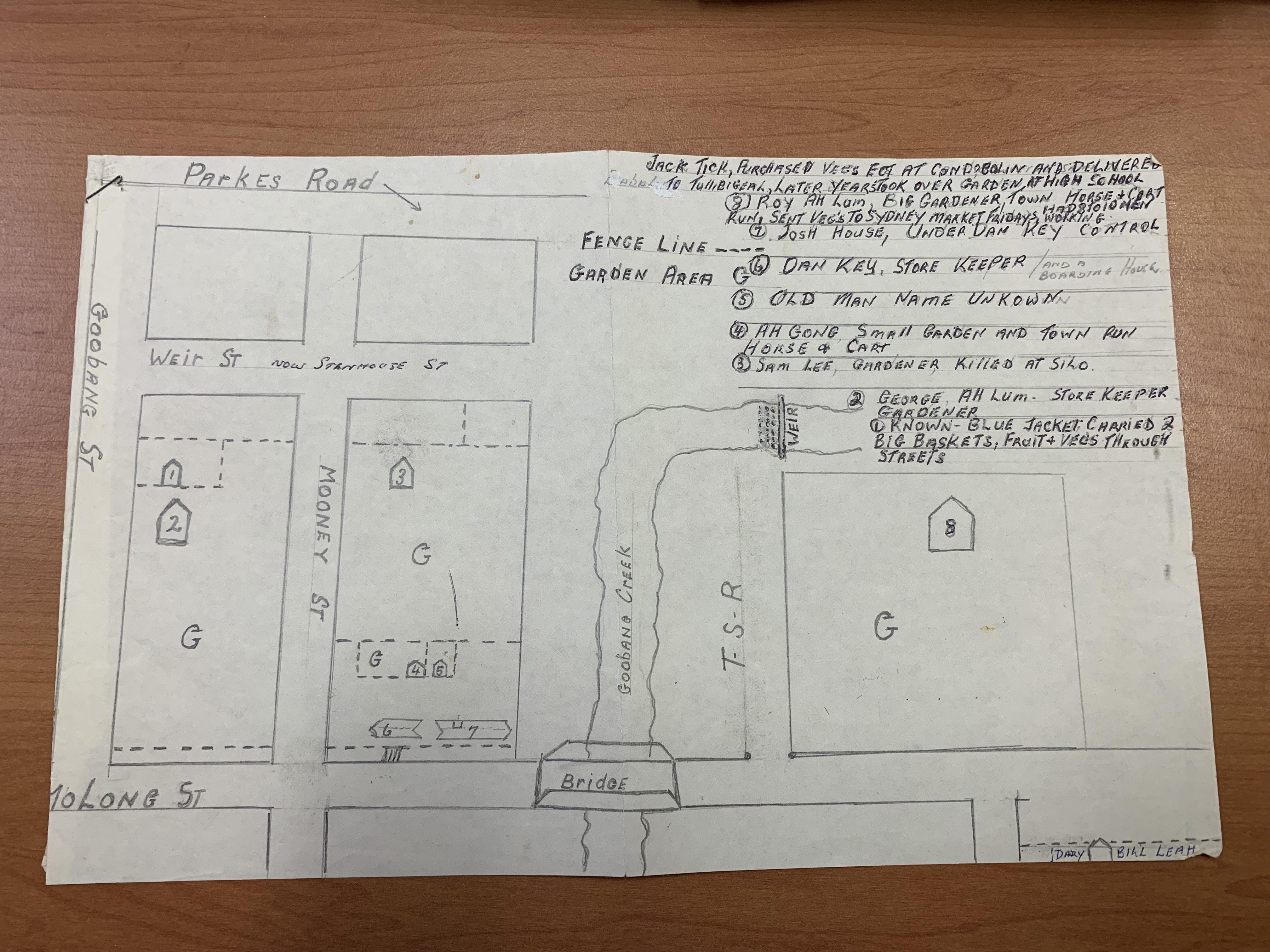
Condobolin Chinese camp map. Presumably drawn from local memory, date unknown.
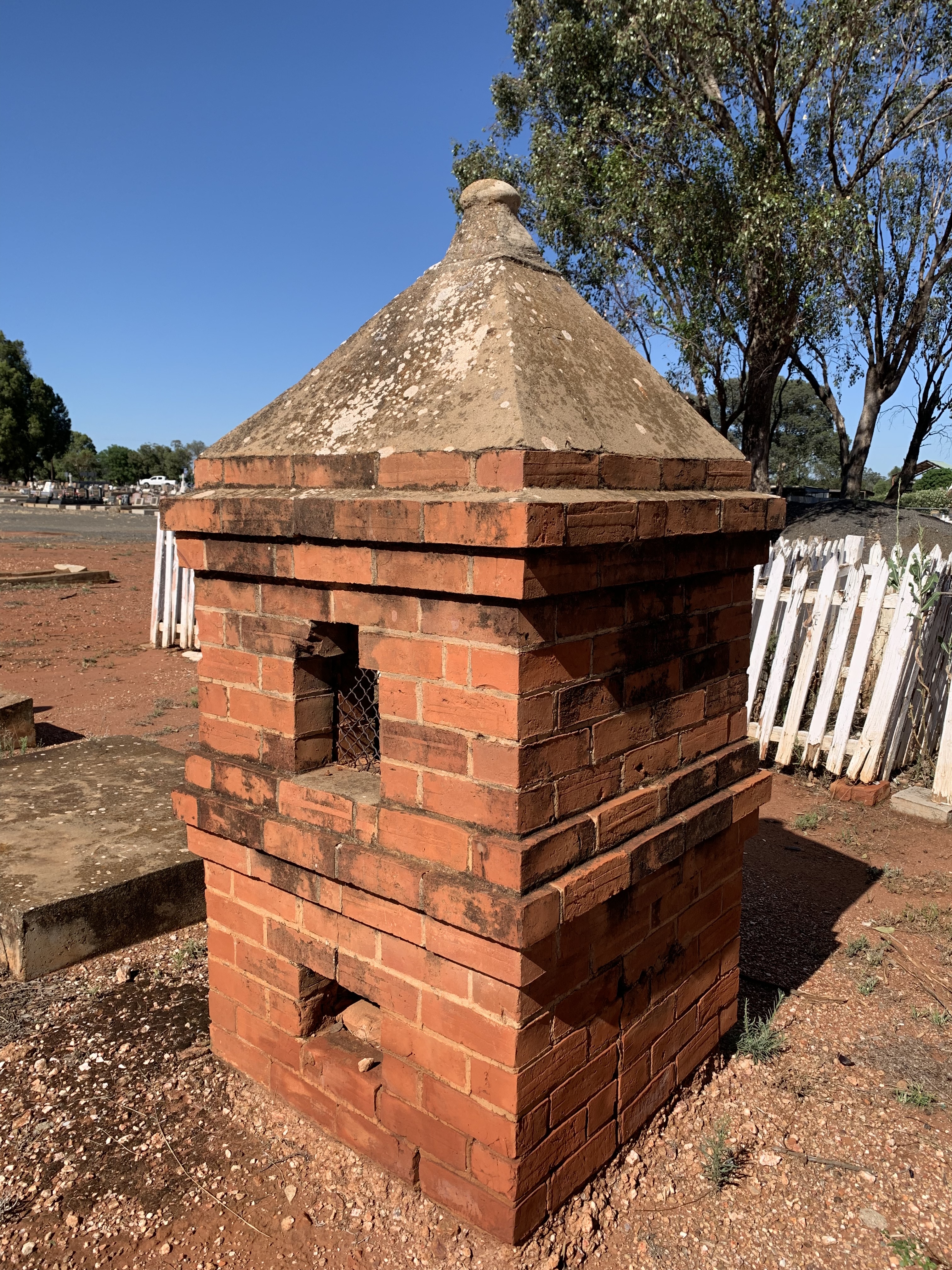
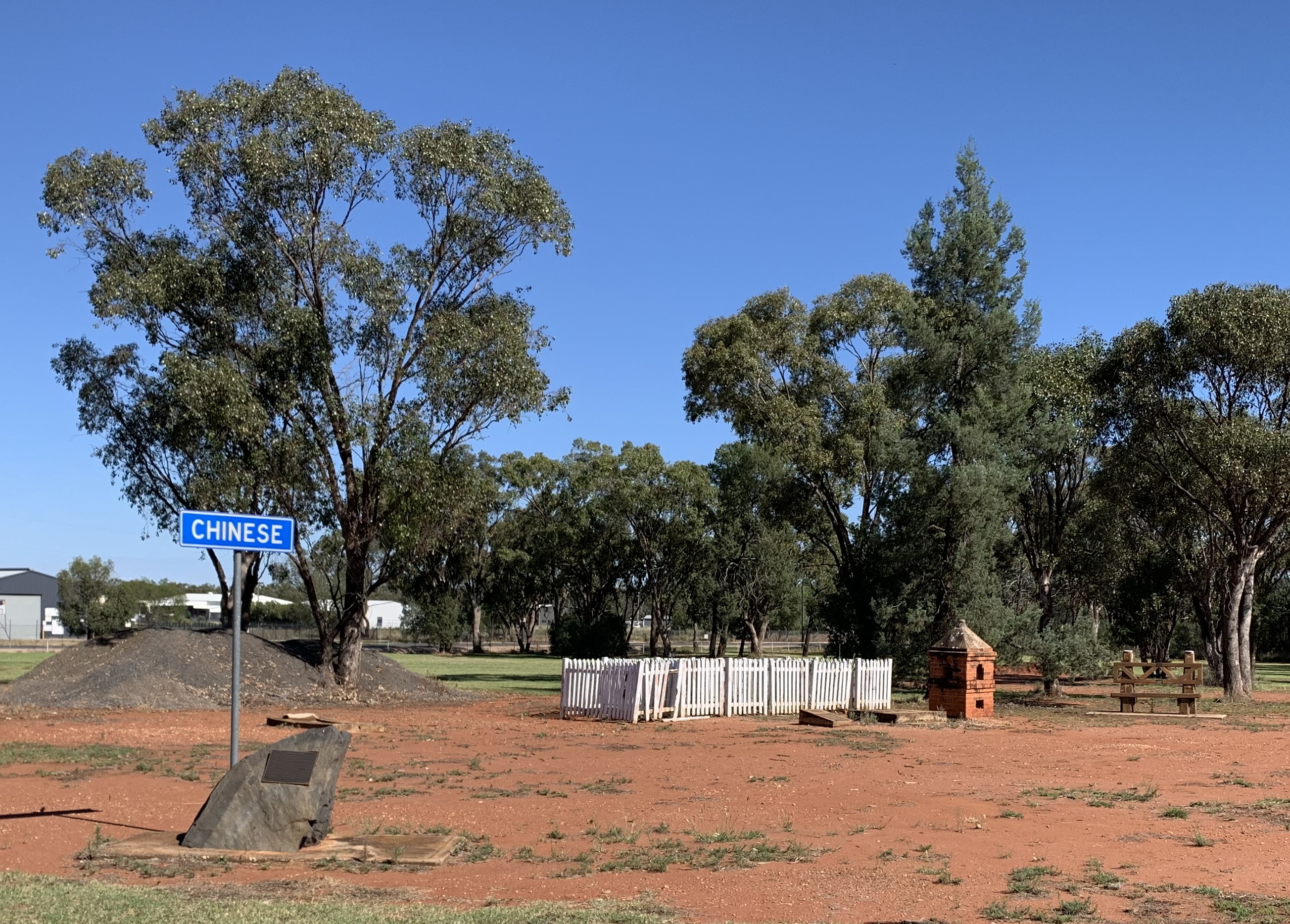
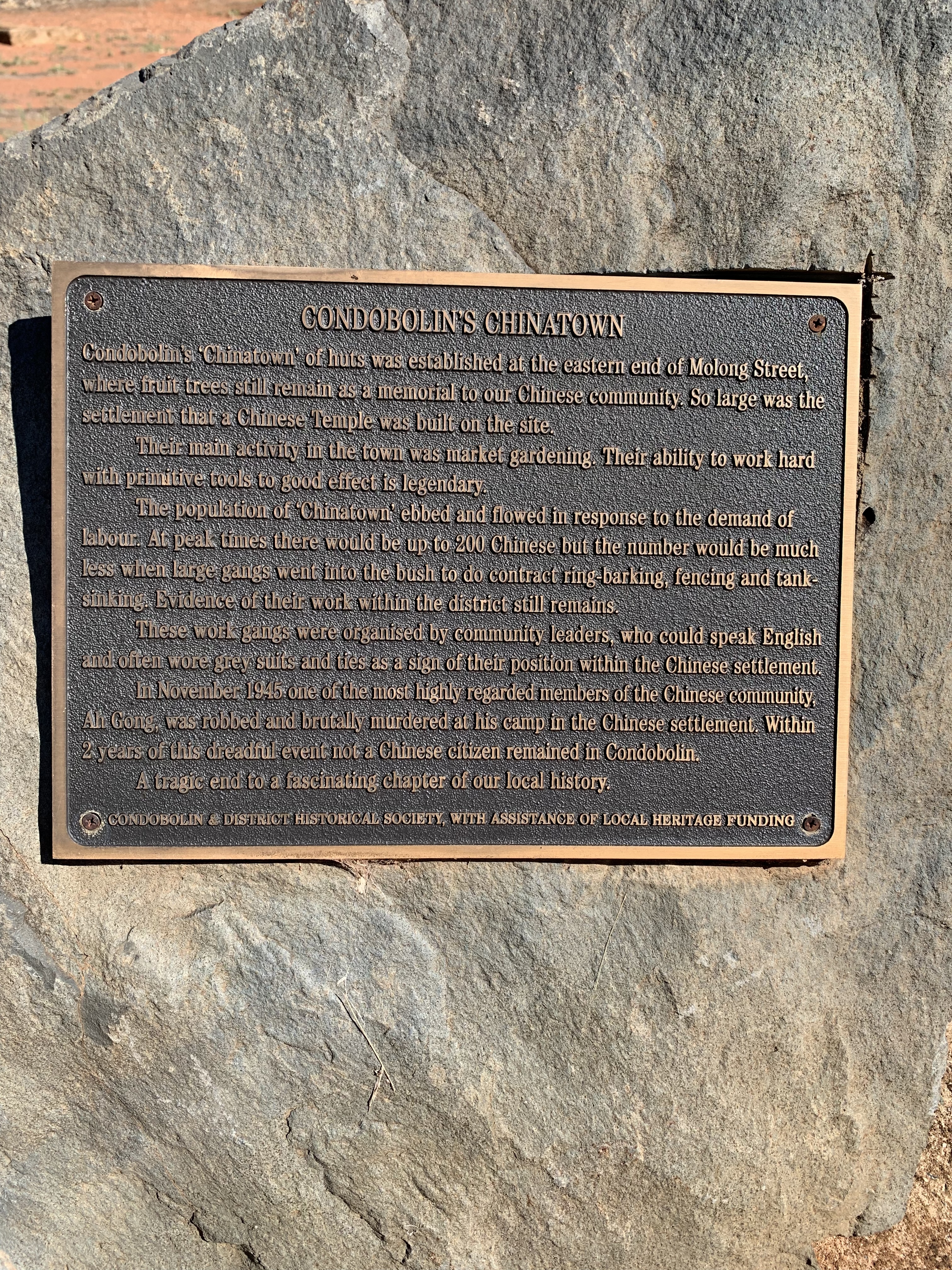
Condobolin Chinatown plaque set up at the Condobolin Cemetery by the Condobolin Historical Society.
CONDOBOLIN’S CHINATOWN
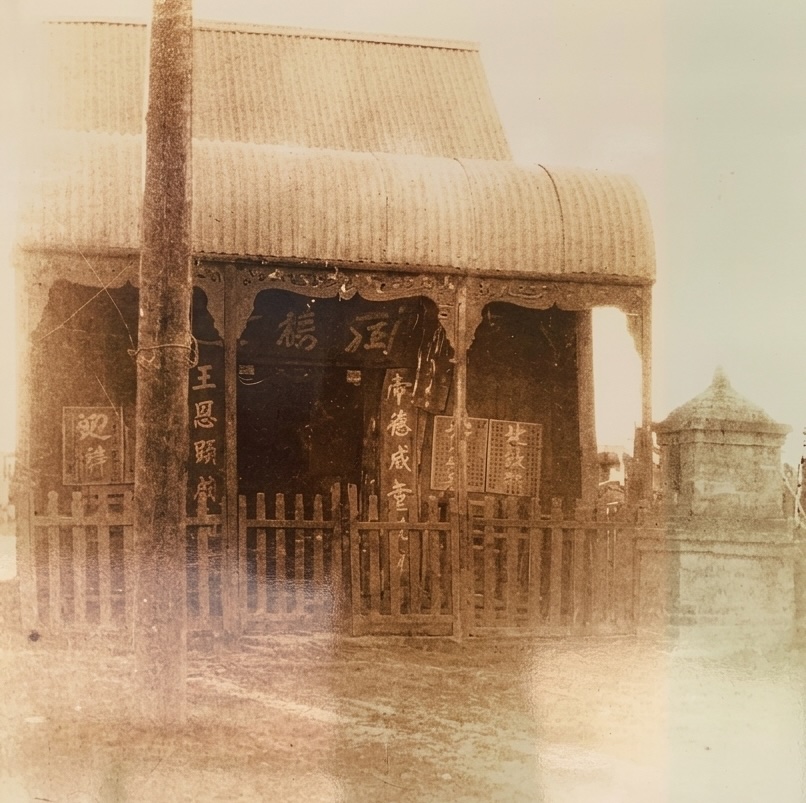
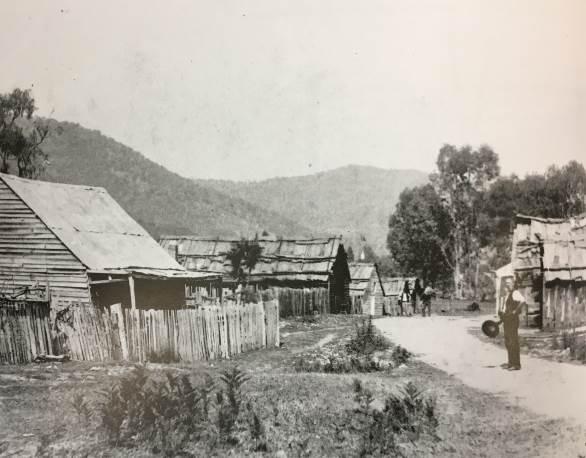
Condobolin’s ‘Chinatown’ of huts was established at the eastern end of Molong Street, where fruit trees still remain as a memorial to our Chinese community. So large was the settlement that a Chinese Temple was built on the site.
Their main activity in the town was market gardening. Their ability to work hard with primitive tools to good effect is legendary.
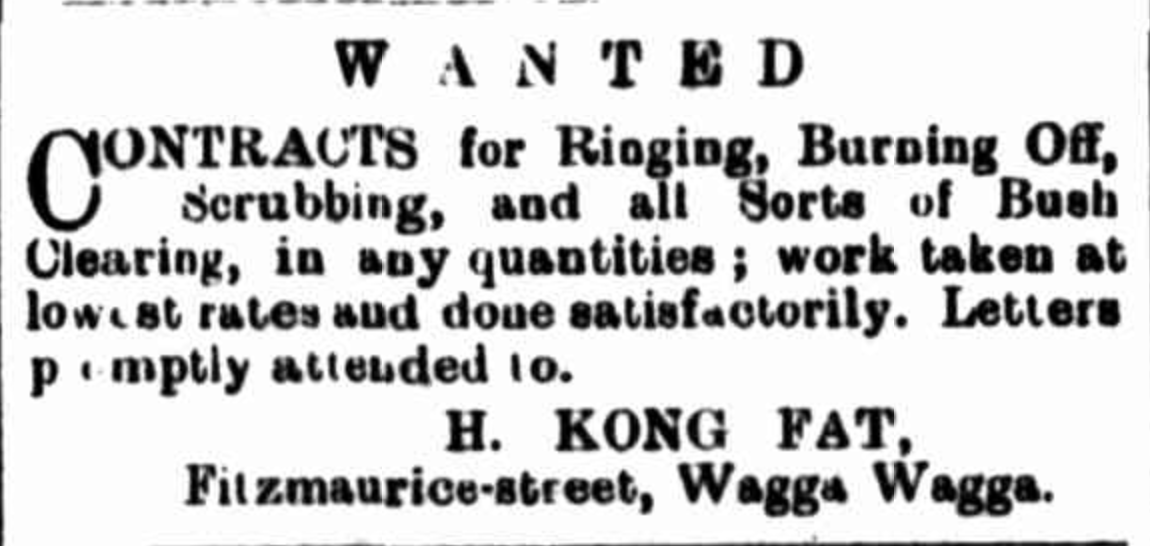
The population of ‘Chinatown’ ebbed and flowed in response to the demand of labour. At peak times there would be up to 200 Chinese but the number would be much less when large gangs went into the bush to do contract ring-barking, fencing and tank-sinking. Evidence of their work within the district still remains.
These work gangs were organised by community leaders, who could speak English and often wore grey suits and ties as a sign of their position within the Chinese settlement.
In November 1945 one of the most highly regarded members of the Chinese community, Ah Gong, was robbed and brutally murdered at his camp in the Chinese settlement. Within 2 years of this dreadful event not a Chinese citizen remained in Condobolin.
A tragic end to a fascinating chapter of our local history.
CONDOBOLIN & DISTRICT HISTORICAL SOCIETY, WITH ASSISTANCE OF LOCAL HERITAGE FUNDING
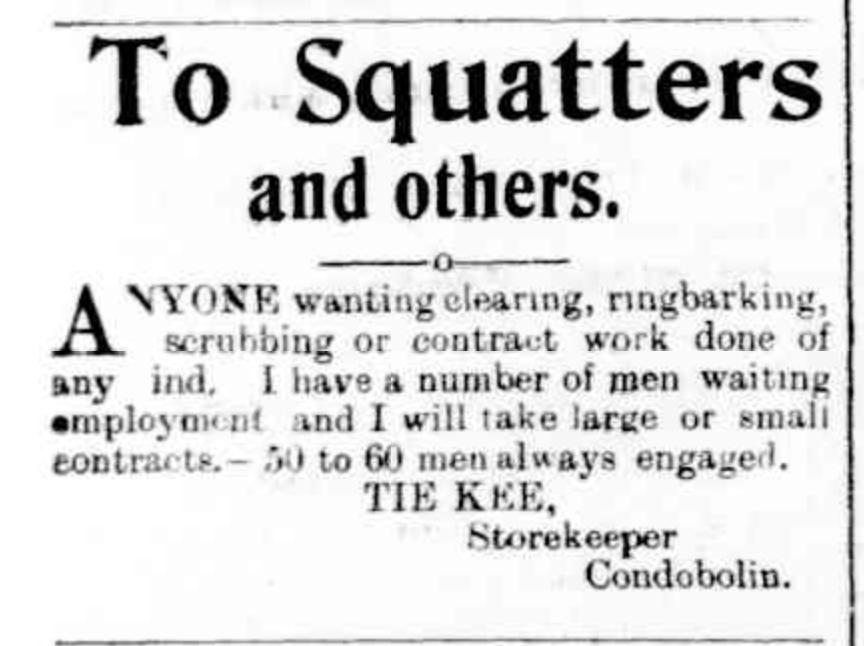
Scrub cutting ad
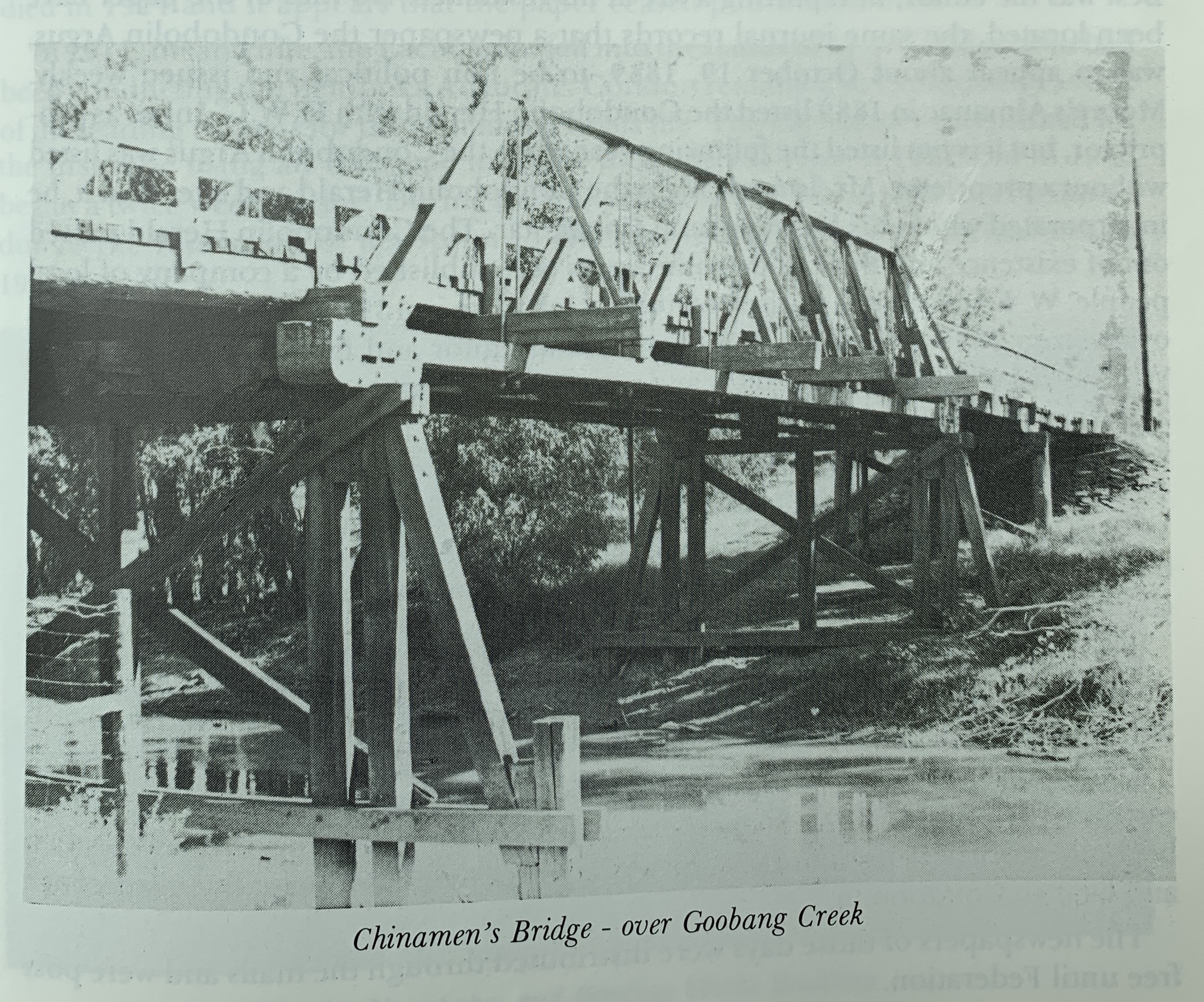
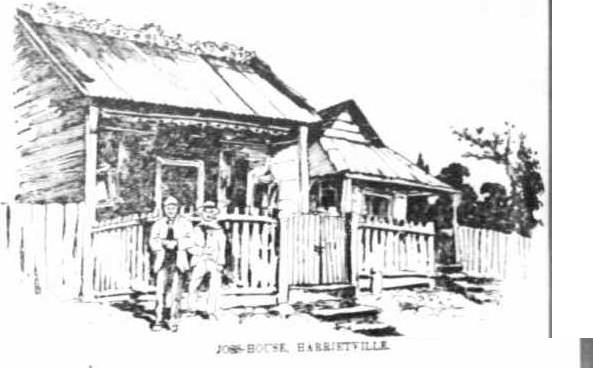
Chinamans Bridge across the Goobang Creek near where the Joss House stood in the middle of the Chinese camp.
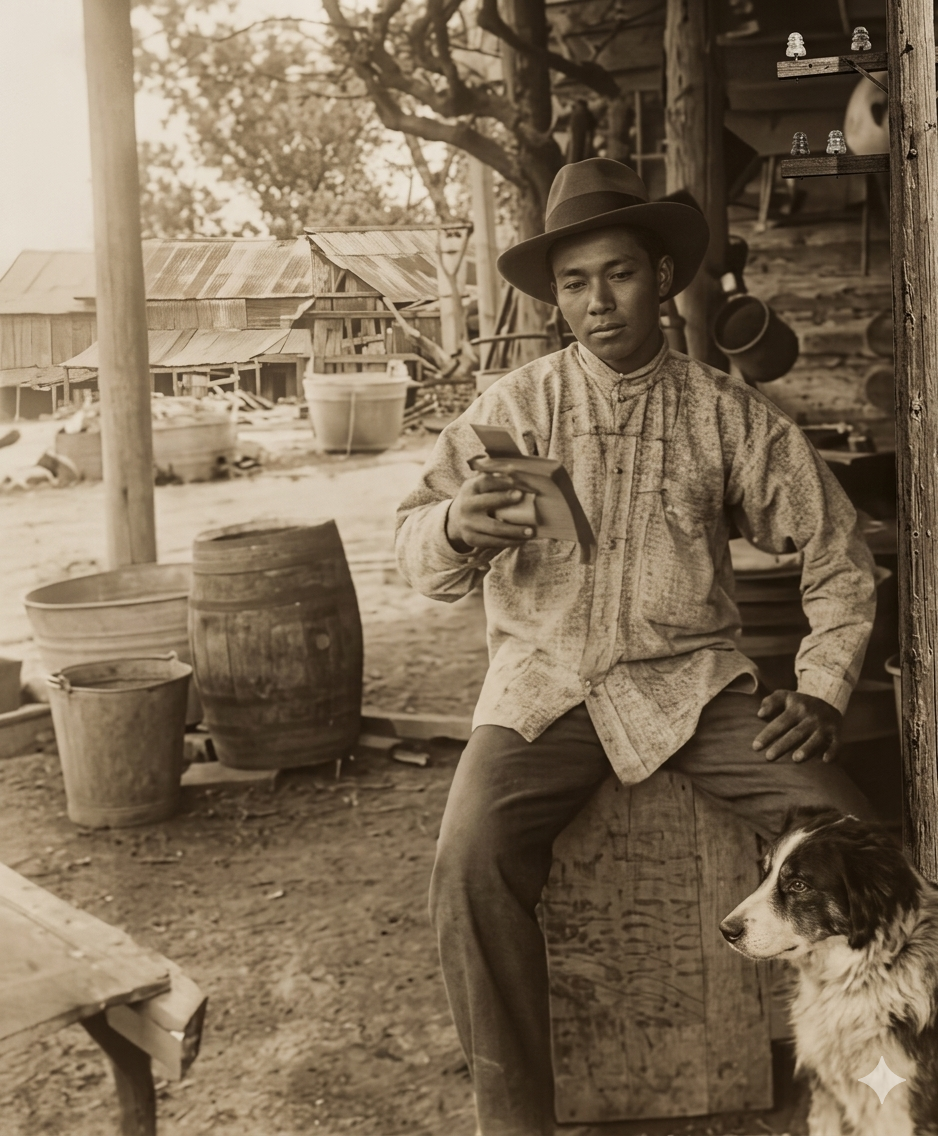
Lee Shear, 1890's. A rare image of a Chinese market gardener when still young.
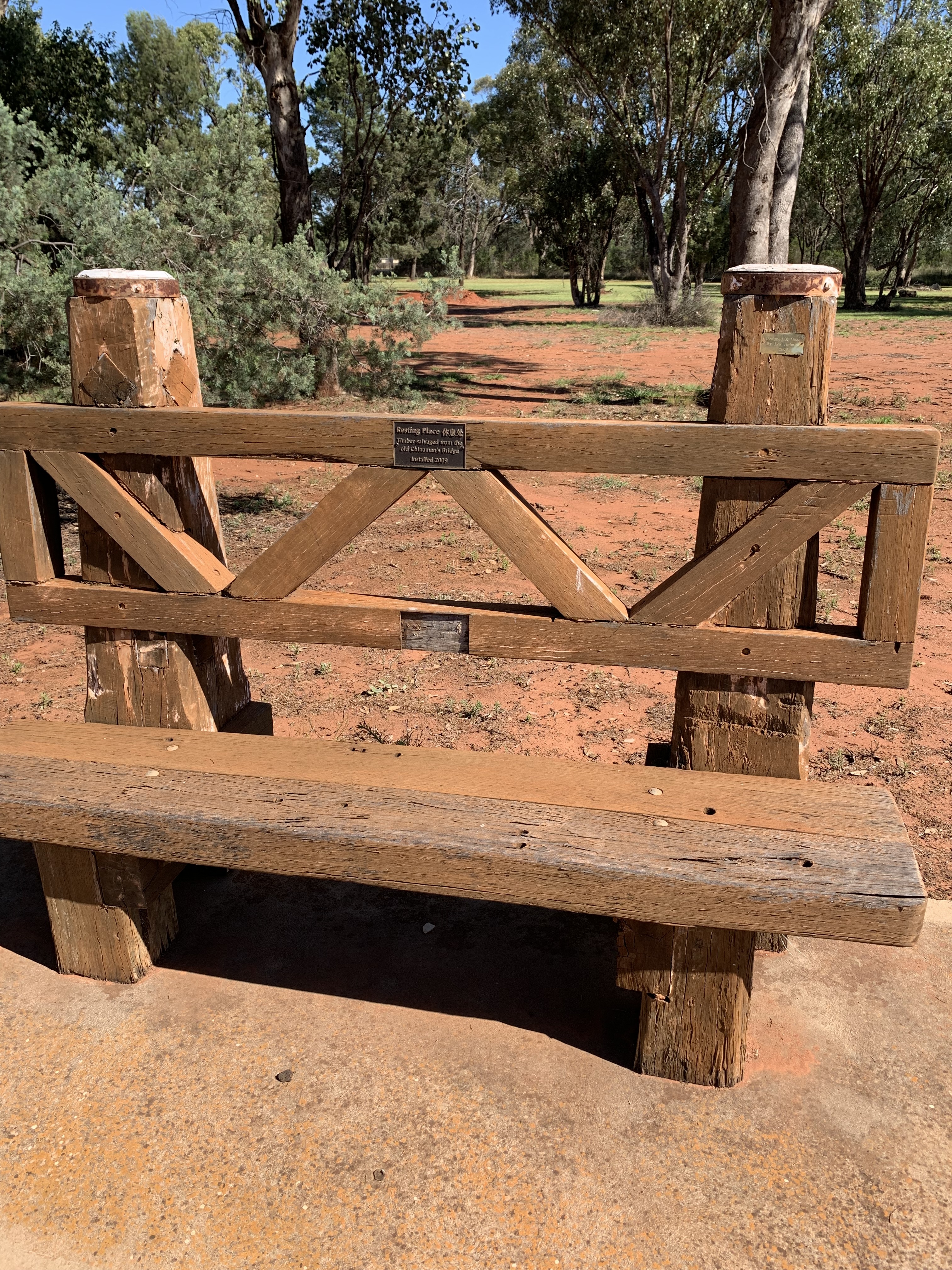
Seat from timbers of Chinaman's Bridge in Condobolin Cemetery