Ah Wong - a story
Date Published
: Observers, literature
: Sydney
: Sydney
: c.1890 to c.1920
Ah Wong meets Mary Poppins
Ah Wong
Unsurprisingly Chinese Australian characters pop up from time to time in 20th century Australian literature and just as unsurprisingly these are usually stock characters – a cook, a miner, a gambler or a gardener, but rarely a father, husband or son and even less likely a mother or daughter.[1] As a result, little is revealed about the motivations or intentions of such characters. This is natural in works by authors who would have understood little, like most of their contemporary European Australians, about the motivations or intentions of their fellow Chinese Australians. People who most European Australians, in fact, would not have felt—until deep into the 20th century at least—were their fellow Australians.
Nevertheless, writers often write from personal experience and something can be occasionally gleaned from their observations, even when sieved through prejudice and ignorance. One such example, it may surprise to learn, is by P. L. Travers (the Australian-born author of the Mary Poppins stories) who wrote an interesting, and for her time, sympathetic account of her childhood association with a Chinese cook. Entitled simply Ah Wong, the story is not well known as Travers apparently produced it in a limited edition as a Christmas special in 1943 with the note:
This edition of Ah Wong is limited to five hundred copies privately printed for the friends of the author as a Christmas greeting.[2]
A copy can be found in the State Library of NSW, however.

P. L. Travers
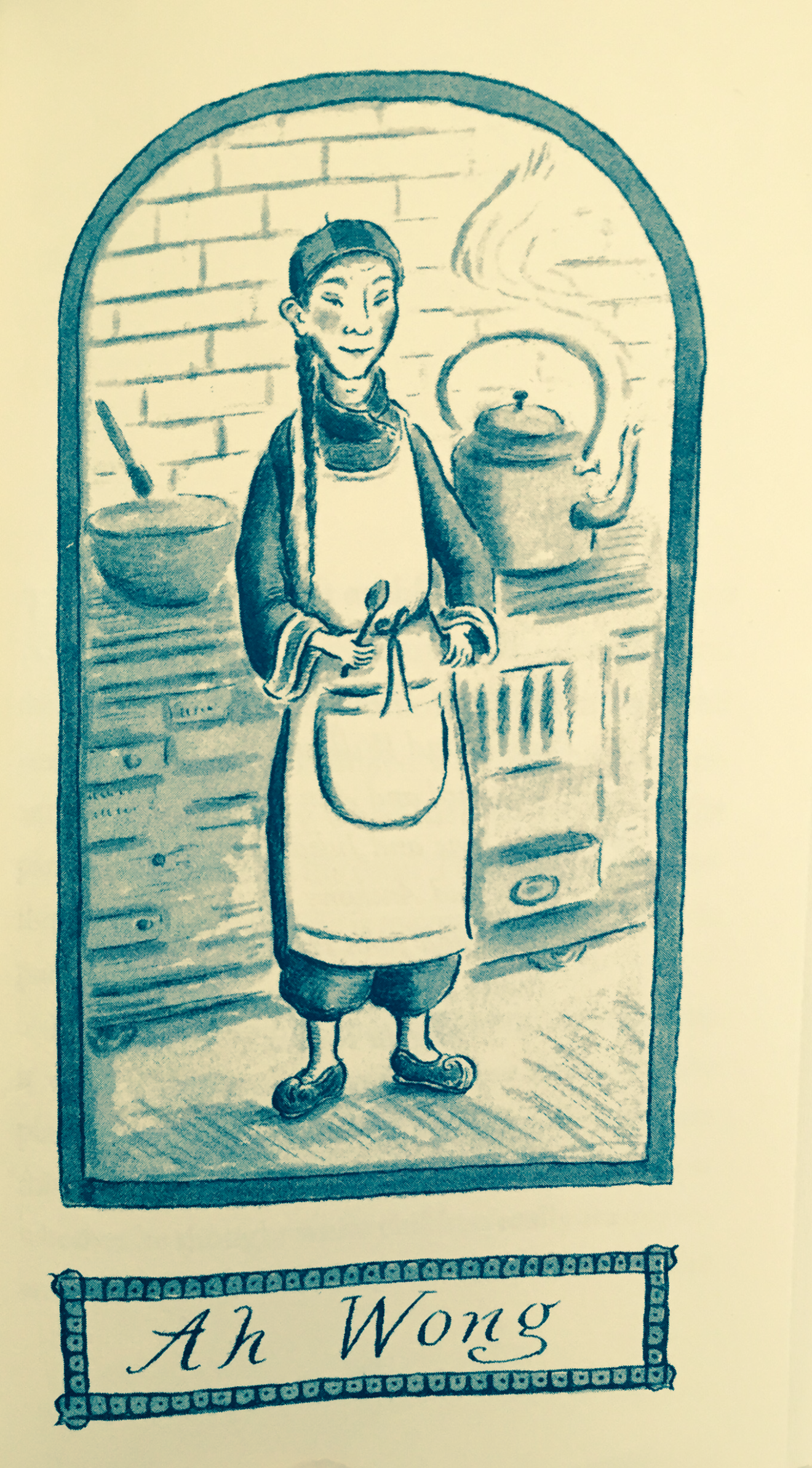
The main character is Ah Wong, who takes care of the children of the family in rural Queensland that employs him, rejects their efforts to convert him to Christianity, and saves all his money. Travers grew up in rural Queensland, and in all likelihood her family employed such a cook or certainly she knew families who did. Travers, child or adult, was ignorant as to why Ah Wong might save his money so earnestly, merely believing that he was saving to return to China:
"All their lives they have saved their money so that they may have enough to take them home."
A very low income and a very high passenger fare it would seem.
In reality of course, men such as Ah Wong were supporting their own families in China and most saved their money by living frugally for this purpose and sending remittances. It was only as they grew too old to work, and/or were impoverished, that they might receive assistance from the well organised district-based societies that were common in Australia to pay their fare home. Unlike the ship Ah Wong takes seemingly full only of aged men—many men when younger also visited their family in China regularly. They would stay for a year or two before returning to Australia with their Certificate Exempting From Dictation Test (CEDTs) to work again for a number of years.[3]
After the death of her father Travers moved to Sydney and wrote for various journals and newspapers. The second half of the Ah Wong story has the girl from Queensland working as a journalist in Sydney where by chance she meets her childhood cook Ah Wong. Once again, neither Travers or her journalist character has much idea of the motivations or life story of men like Ah Wong. What was known, was that Chinese men traveling through the Port of Sydney by ship to and from China, was common. That many by the early 20th century were old, and that some returned to China for a final trip after a lifetime working in Australia would also have been general knowledge at the time. And this is what we are told Ah Wong is doing—taking ship in Sydney to finally return to China.
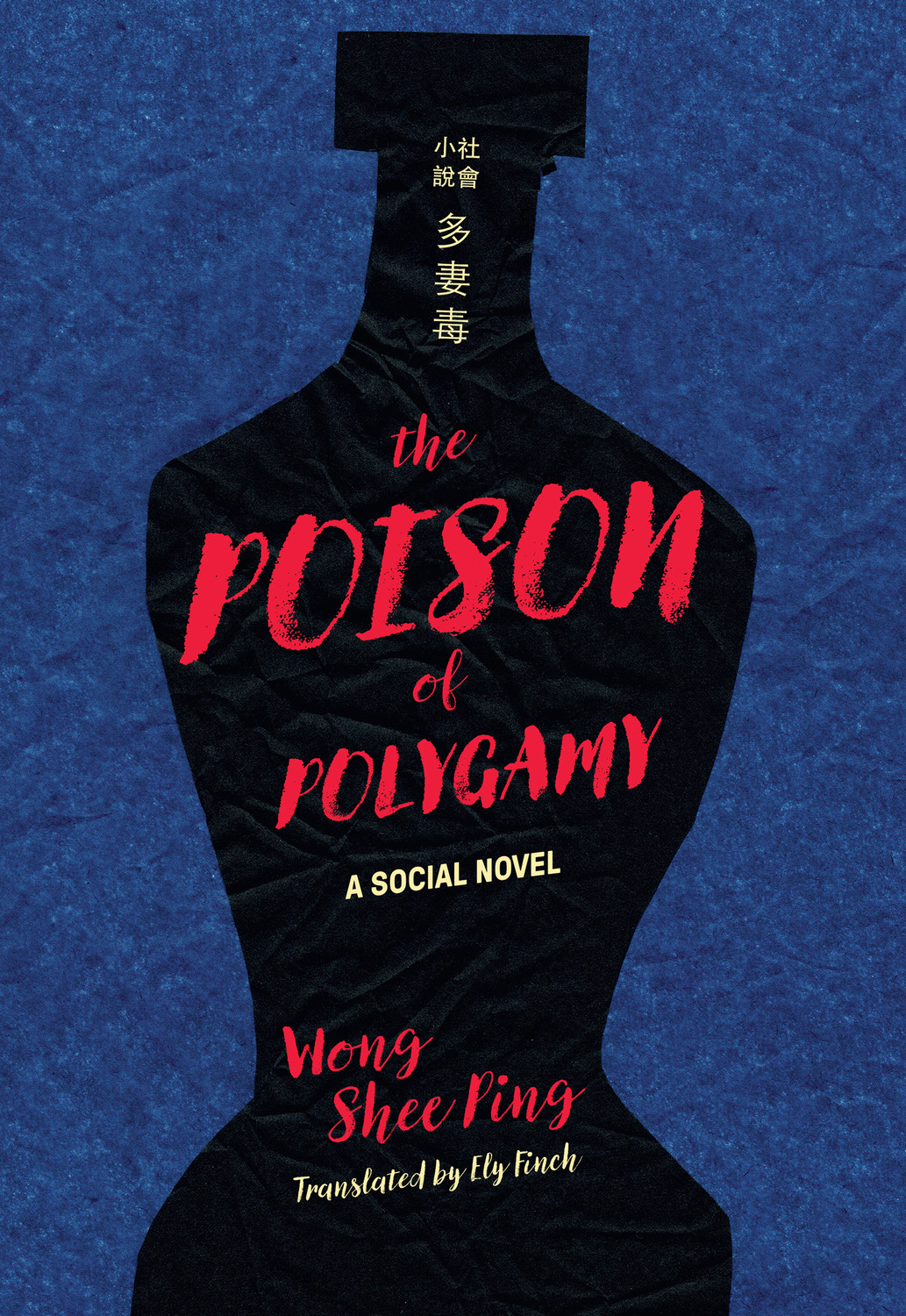
Only republished in 2014, Ah Wong is a fascinating addition to the scarce Chinese Australian literature. However, while it can be categorised as “sympathetic” despite its stereotyping, this only highlights the limitations of sympathy without knowledge. For Travers, Ah Wong can only be written as an amusing two-dimensional character with none of the insights her Mary Poppins’ characters display. To date, the closest to such real insights we have in the literature, apart from The Poison of Polygamy (see Chinese Voices 8), is not a work of fiction but of oral history—the recently published South Flows the Pearl is a fine addition to much-needed individual insights into Chinese Australian history.
Further reading
Wong Shee Ping, (Ely Finch, trans),
The Poison of Polygamy - A Social Novel, University of Sydney Press, 2019.
Mavis Yen, (Siaoman Yen & Richard Horsburgh, eds), South Flows the Pearl, (Sydney University Press, 2022).
[1] Cheon the cook in We of the Never Never or Ah Soon the vegetable hawker in Henry Lawson’s Ah Soon: A Chinese-Australian Story, for example. The great exception to this in Australian literature are the mothers, wives and husbands that appear in The Poison of Polygamy written by Wong Shee Ping.
[2] P. L. Travers, Ah Wong, New York, High Grade Press, 1943.
[3] For a detailed account of this lifestyle see, Michael Williams, Returning home with glory: Chinese villagers around the Pacific, 1849 to 1949, Hong Kong University Press, Hong Kong, 2018.